



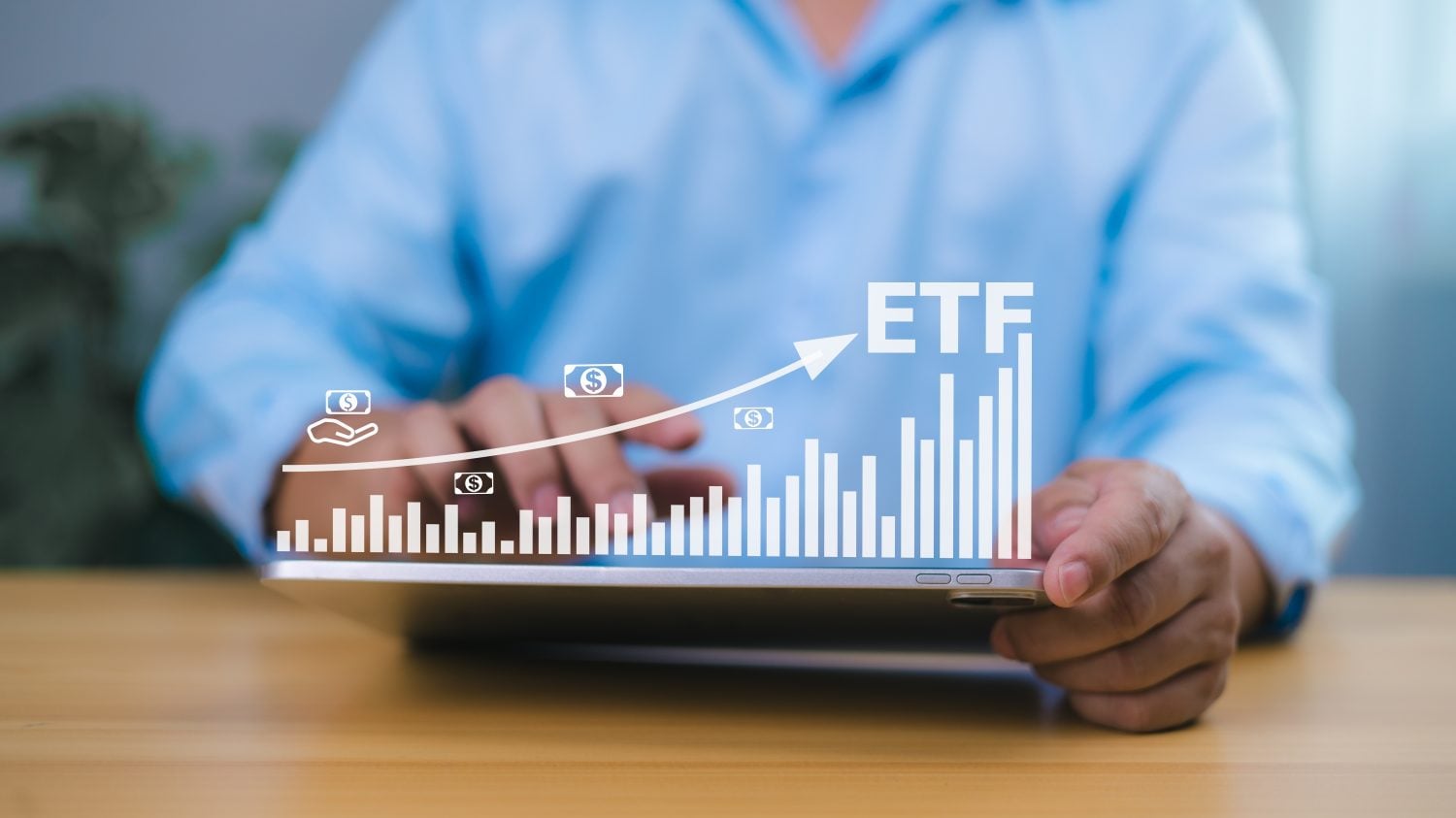
After three years of hyperscaler capital spending feeding through to chip designers, foundry capacity, and lithography backlogs, the semiconductor ETF complex has separated into distinct buckets. iShares Semiconductor ETF (NASDAQ:SOXX | SOXX Price Prediction), VanEck Semiconductor ETF (NASDAQ:SMH), and First Trust Nasdaq Semiconductor ETF (NASDAQ:FTXL) are the three broad U.S.-listed vehicles that capture the trade in clean, liquid form. They differ in construction, and that difference has produced a wide spread in performance during the current cycle.
Goldman Sachs Asset Management’s 2026 outlook frames the backdrop bluntly: the AI capex boom is “driving business and investment activity” while the rest of the U.S. economy softens. PineBridge and MetLife describe datacenter equipment growth as “essentially locked in for the next four to five years” with annual growth near 25%. That is the structural setup behind the three funds below.
SOXX: The Largest, Broadest Way to Own the Cycle
SOXX tracks the NYSE Semiconductor Index, a modified market-cap weighted basket of 30 U.S.-listed chip names. The investment logic is straightforward: AI capex is a flow of dollars moving from a small group of hyperscalers to a wide set of suppliers, and SOXX owns enough of that supplier base to capture the cycle without making a single-name bet. The fund’s expense ratio runs at 0.34%, with the fact sheet referenced as of March 2026.
The modified weighting matters, as a pure cap weighting would allow NVIDIA to dominate to a degree that resembles holding a single stock. The cap on top names spreads exposure into equipment makers and analog franchises that benefit from the same capex wave through a different mechanism. On the positive side, SOXX is up roughly 87% year-to-date and 180% over the trailing year, mirroring the trajectory of hyperscaler order books since the deepseek-driven reset early last year.
The trade-off: SOXX is U.S.-listed only, so there is no direct exposure to ASML or TSMC. However, investors who view the lithography and foundry layers as the truest bottleneck in the AI buildout will find that exclusion meaningful.
SMH: Concentrated Exposure to the Choke Points
SMH tracks the MarketVector US Listed Semiconductor 10% Capped Screened Index and holds 25 names. The fund carries $6.3 billion in net assets with an expense ratio of 0.35%. The point of owning SMH rather than SOXX is the willingness to let the largest, most capacity-constrained companies drive returns.
The top holdings as of May 27, 2026, are NVIDIA at 16%, Taiwan Semi at 9%, Intel at 8%, Advanced Micro Devices at 7%, and Broadcom at 7%. Micron sits at 6%. Equipment names, including ASML, Lam Research, and Applied Materials, make up around 12% of the fund. Geographically, about 4% sits in the Netherlands and 9% in Taiwan, reflecting exposure to the foundry and lithography links of the chain that SOXX skips.
As it stands, SMH returned 65% year-to-date and 152% over one year, lagging SOXX in 2026, but the lag tracks the way capital has rotated within the cycle. Memory and equipment names have outrun the largest cap-weighted incumbents over the past several months, and SMH’s heavier top-5 concentration has worked against it during that rotation. As Eric Jhonsa put it on a recent podcast, “demand keeps staying ahead of supply”, which has favored capacity providers over the design layer.
The trade-off is concentration: a bad quarter from AMD or Broadcom moves SMH in a way it would not move SOXX, and international tickers add a second layer of geopolitical sensitivity around Taiwan and export controls.
FTXL: The Smart-Beta Outsider That Has Quietly Led the Group
FTXL represents our value play here. This fund tracks Nasdaq’s unique AlphaDEX index, which ranks chip stocks by growth, value, and momentum metrics and then groups them into tier-weighted buckets. Its structural management fee sits right at 0.60%, marking it the costliest option among these choices. According to its latest official regulatory filing, the product managed roughly $1.48 billion in total investor assets as of the close of March.
That construction is what makes FTXL relevant to the AI capex theme rather than a generic diversified bet. The factor screen pulls in semicap equipment, memory, and connectivity names at weightings that the cap-weighted indexes underemphasize. As of March 31, 2026, top positions included NVIDIA at 8%, Intel at 8%, Broadcom at 8%, Qualcomm at 8%, and Micron at 7%. The portfolio extends to 34 holdings, including KLA, Marvell, ON Semiconductor, Astera Labs, and Credo, names that benefit from datacenter interconnect and advanced packaging spend.
The performance has been a surprise to the group. FTXL returned 99% year-to-date and 219% over the trailing 12 months. Memory rebound, semicap order strength, and recovery in second-tier analog names have all rewarded the factor tilt. That outperformance does not annualize cleanly into a thesis, and the fund’s smaller AUM and 0.60% fee are real costs.
The tradeoff: factor methodologies rebalance on a schedule, which can mean trimming winners that the cap-weighted indexes keep riding. FTXL also concentrates on roughly the same names as SOXX and SMH at the top, so the diversification benefit is structural rather than dramatic.
Choosing Between the Three
The decision rests on which part of the AI capex chain an investor wants exposure to. SOXX is the default broad vehicle, leaning toward U.S.-listed designers and integrated manufacturers, and the largest pool of capital. SMH provides direct exposure to the foundry and lithography sectors through TSMC and ASML, with a concentration that cuts both ways. FTXL leans into semicap equipment, memory, and emerging interconnect names through a factor screen, with a higher fee and a smaller asset base, but a 2026 return profile that has run ahead of the two larger funds.
NVIDIA’s own framing, that AI capex grows “3x to 4x” by the end of the decade, sets a long runway. Each of these three funds expresses a different view on which part of that spending compounds fastest.











 Top Gaining Stocks
 Top Losing Stocks