Coca-Cola vs Exxon: Which Blue Chip Won the Decade?
One blue chip quietly compounded dividends for 64 straight years while the other got kicked out of the Dow during a historic crash. A thousand dollars placed in each tells a surprisingly complicated story about which path actually paid off.


Two Blue Chips, Two Very Different Stories
Coca-Cola (NYSE:KO | KO Price Prediction) has spent the past decade doing what it does best: quietly compounding. The company refranchised bottling operations, bought Costa Coffee in 2019, added BODYARMOR in 2021, and rode Coca-Cola Zero Sugar into a growth engine (volume up 13% to 14%). Henrique Braun took over as CEO in 2026, inheriting a portfolio that just posted $47.94 billion in FY2025 revenue and a 64th straight annual dividend hike.
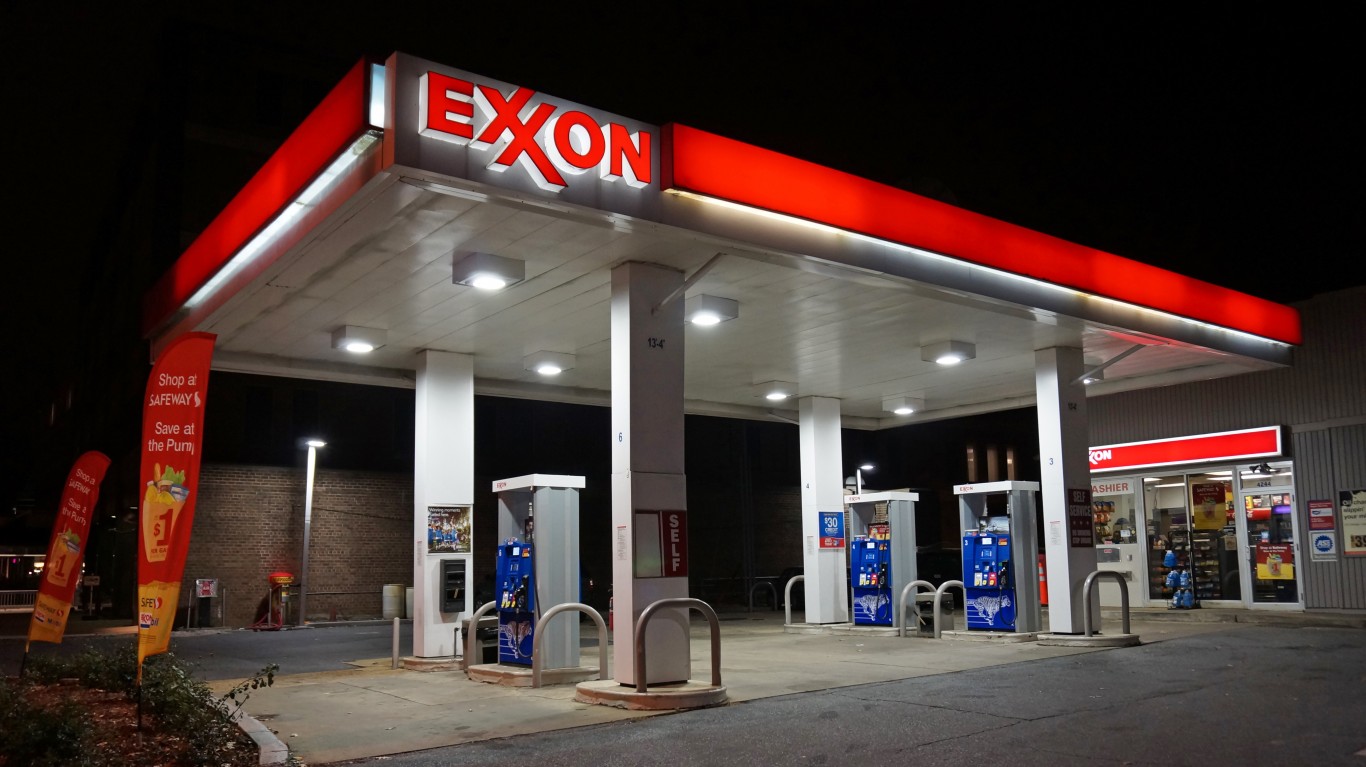
Exxon Mobil (NYSE:XOM) took a wilder ride. Removed from the Dow in August 2020 during the oil crash, the company doubled down instead of pivoting green. CEO Darren Woods pushed the $60 billion Pioneer Natural Resources deal to close in 2024, drove Permian output to 1.6 million oil-equivalent barrels per day (boed), and lifted Guyana output to 700,000 gross barrels per day. Total production hit 4.7 million boed in 2025, the highest in more than 40 years.
What $1,000 Would Be Worth Today
| Coca-Cola | Exxon | S&P 500 | |
| 1-Year | $1,221 (+22.12%) | $1,275 (+27.51%) | $1,202 (+20.16%) |
| 5-Year | $1,776 (+77.57%) | $2,771 (+177.06%) | $1,712 (+71.15%) |
| 10-Year | $2,512 (+151.17%) | $2,330 (+133.00%) | $3,505 (+250.53%) |
Both stocks beat the S&P 500 over one and five years, and both trailed it over a decade. Exxon’s five-year figure looks heroic, but remember the starting point: shares changed hands near $50.94 in July 2021, still bruised from the pandemic collapse. Timing did most of the work. Coca-Cola’s story is less exciting but more repeatable: low beta (0.35), consistent price appreciation, and a growing dividend that lifts total return every year. Neither figure above includes reinvested dividends, which would meaningfully sweeten both total returns.
Where to Put Fresh Money
Coca-Cola is the choice today for defensive compounding, a 2.5% yield, and exposure to global unit-case volume growth. However, a 26 trailing P/E on a low-growth beverage business feels rich after a big year-to-date run.


Exxon is the way to go if advantaged Permian and Guyana barrels keep printing cash and the $20 billion buyback plan shrinks the float meaningfully. The risks are that oil prices can be cyclically elevated, or that Middle East disruptions (Q1 alone carried $706 million in losses) could become recurring.


In other words, Coca-Cola fits a sleep-well-at-night profile, while Exxon reads as a smaller cyclical tilt. The right mix depends on an investor’s risk tolerance and income needs.
Contact [email protected] for any questions or corrections.
Trey has been an editor and author at 24/7 Wall St. for more than a decade, where he has published thousands of articles analyzing corporate earnings, dividend stocks, short interest, insider buying, private equity, and market trends. His comprehensive coverage spans the full spectrum of financial markets, from blue-chip stalwarts to emerging growth companies.
Beyond 24/7 Wall St., Trey has created and edited financial content for Benzinga and AOL's BloggingStocks, contributing additional hundreds of articles to the investment community. He previously oversaw the 24/7 Climate Insights site, managing editorial operations and content strategy, and currently oversees and creates content for My Investing News.
Trey's editorial expertise extends across multiple publishing environments. He served as production editor at Dearborn Financial Publishing and development editor at Kaplan, where he helped shape financial education materials. Earlier in his career, he worked as a writer-producer at SVE. His freelance editing portfolio includes work for prestigious clients such as Sage Publications, Rand McNally, the Institute for Supply Management, the American Library Association, Eggplant Literary Productions, and Spiegel.
Outside of financial journalism, Trey writes fiction and has been an active member of the writing community for years, overseeing a long-running critique group and moderating workshop sessions at regional conventions. He lives with his family in an old house in the Midwest.