Elon Musk Has Mojo Back, As Tesla Quarterly Deliveries Skyrocket
Tesla just posted its biggest Q2 delivery number ever, but the stock dropped sharply anyway, and the real question investors are now asking has nothing to do with cars.

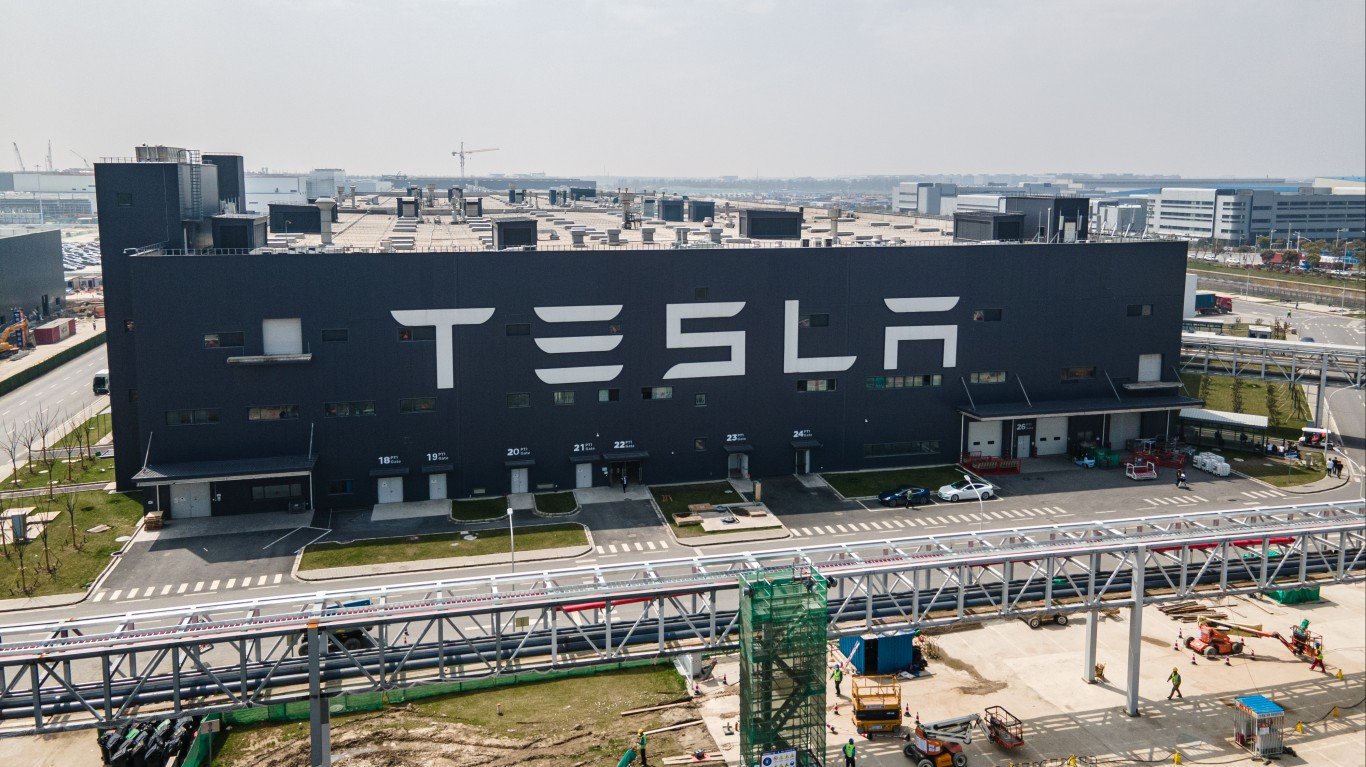
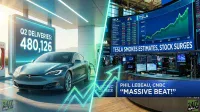
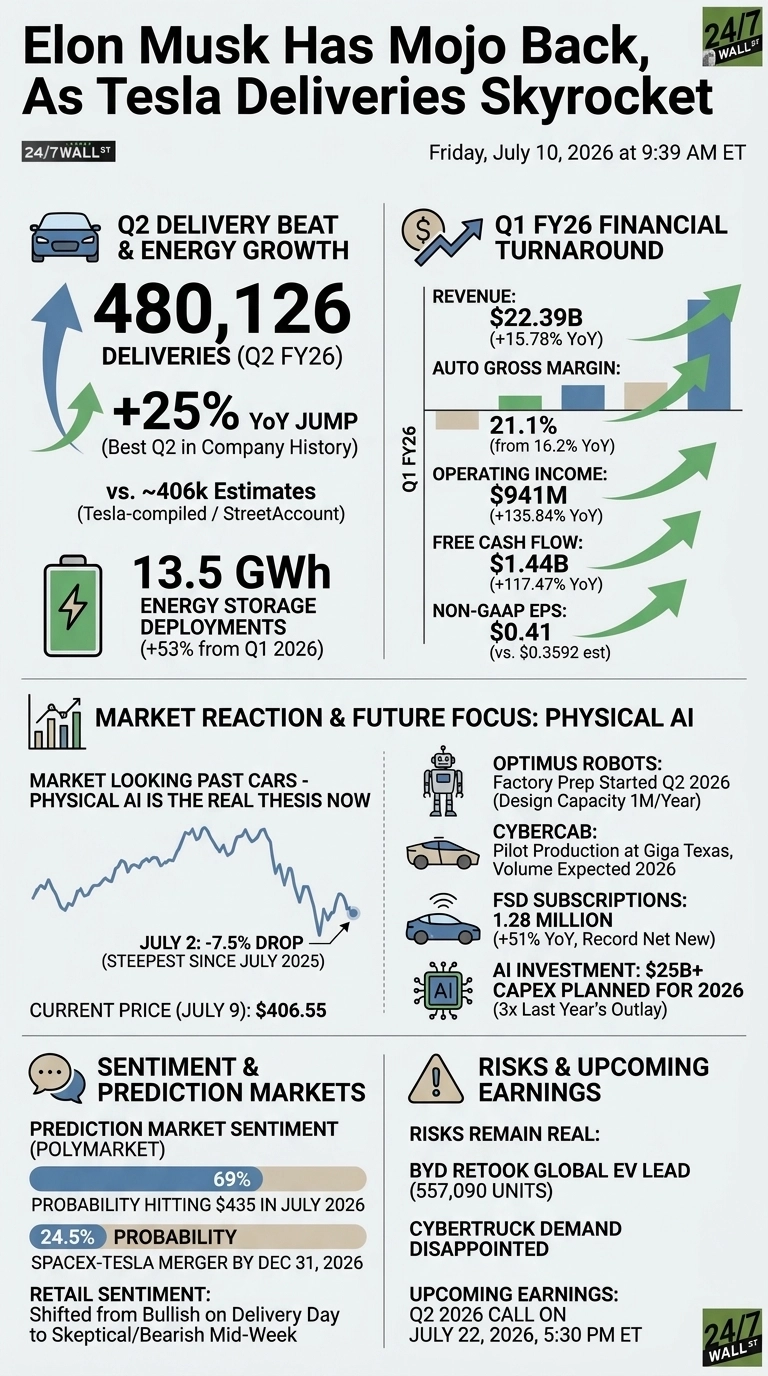
Tesla’s Q2 delivery print reset the narrative. After two straight years of sales declines, Tesla (NASDAQ:TSLA | TSLA Price Prediction) reported 480,126 deliveries and 451,758 vehicles produced in Q2 2026, blowing past Wall Street expectations. A Tesla-compiled consensus had targeted 406,024 deliveries, while StreetAccount’s average was 406,600. Bloomberg called it a 25% jump from the year-earlier period and the best Q2 performance in company history.
The beat wasn’t a fluke of easy comps. CFRA’s Garrett Nelson was cited by Bloomberg as saying, “This was a much stronger than expected deliveries number, which we think was primarily driven by China and Europe.” Energy storage deployments came in at 13.5 GWh, up over 50% from Q1 2026.
The Market Is Already Looking Past the Cars
Despite the beat, Tesla shares fell 7.5% on Thursday July 2, the steepest drop since July 2025, after four straight up days including a roughly 8% advance on Monday. Karobaar Capital CIO Haris Khurshid told Bloomberg: “Once the news actually arrived there just wasn’t as much left to get excited about.”
Shares have since stabilized. TSLA closed at $406.55 on July 9. Prediction markets on Polymarket are pricing a 72.5% probability of an up day on July 10, with month-end targets skewing bullish (69% probability of hitting $435 in July).
Physical AI Is the Real Thesis Now
Q1 FY26 already showed the operating turn. Revenue grew 15.78% YoY to $22.39 billion, non-GAAP EPS came in at $0.41 versus $0.3481 estimated, and automotive gross margin expanded to 21.1% from 16.2%. Operating income surged 135.84%. Active FSD subscriptions climbed 51% YoY to 1.28 million.
UBS analyst Joseph Spak raised his TSLA price target to $442 from $364, citing long-term potential in physical AI and robotics. JPMorgan called a potential SpaceX-Tesla merger “strategically coherent”. Polymarket assigns that merger a 24.5% probability by December 31.
What to Watch Into Q2 Earnings
Tesla reports Q2 2026 financials after the close Wednesday, July 22, 2026, with the call at 5:30 p.m. Eastern. Capex is the story behind the story: Tesla plans to spend more than $25 billion this year, roughly three times last year’s outlay, on Optimus and autonomous Cybercabs, resulting in expected negative cash flow.
Risks remain real. BYD retook the global EV lead with 557,090 units, Cybertruck demand has disappointed, and SpaceX has bought thousands of Cybertrucks since late last year. Still, deliveries confirm the auto franchise is intact, supplying the missing ingredient for the AI story.


Contact [email protected] for any questions or corrections.
Gerelyn Terzo is the author of dividend investing handbook "Dividend Investing Strategies: How to Have Your Cake & Eat It Too." A veteran financial journalist, she covers agri-finance for outlets like Global AgInvesting and the broader stock market and personal finance for 24/7 Wall Street. She began at CNBC and later helped launch Fox Business in New York. Gerelyn currently resides in Woodland Park, Colorado and dabbles in nature photography as a hobby.