Palo Alto Is Paying $4.5 Billion for a Startup Ex-OpenAI Researchers Founded Last Year

This post may contain links from our sponsors and affiliates, and Flywheel Publishing may receive compensation for actions taken through them.
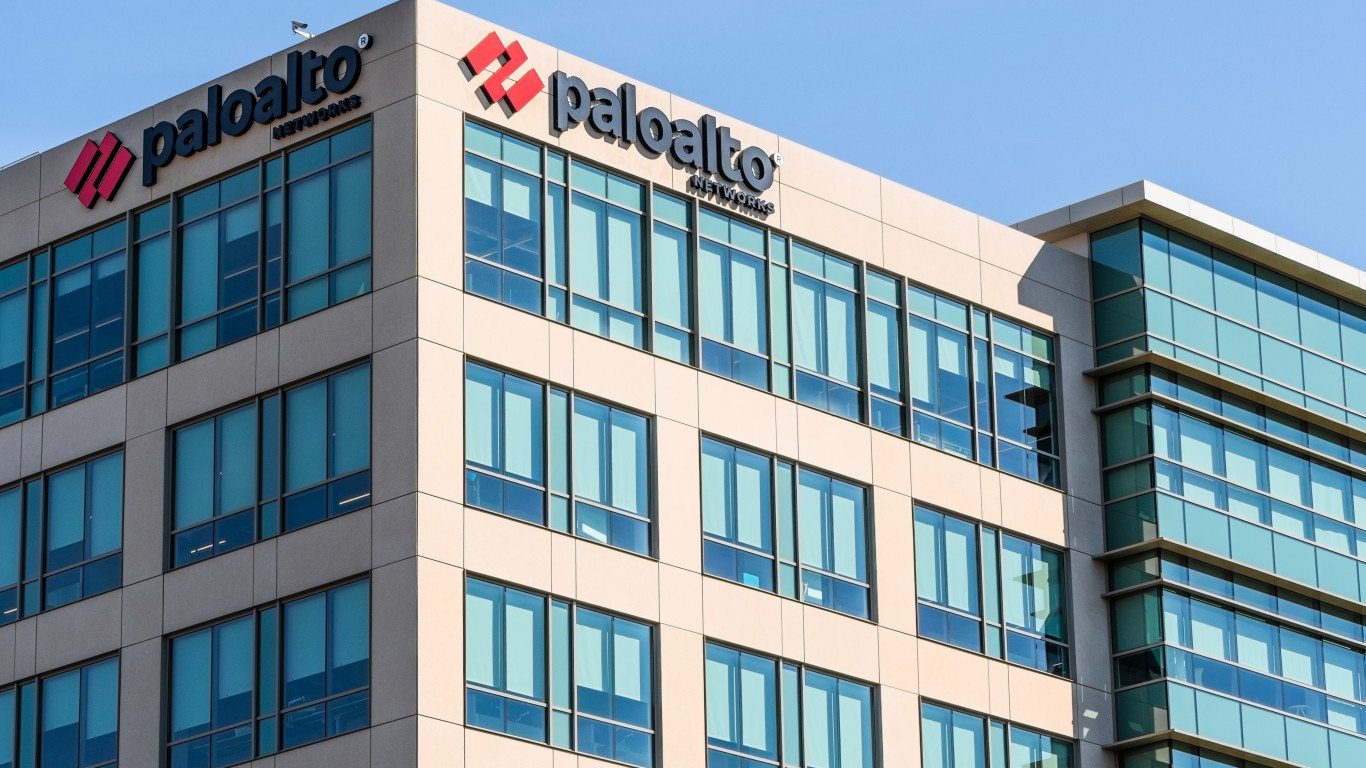
After the market closed on November 18, 2026[1], Palo Alto Networks (NASDAQ:PANW | PANW Price Prediction) signed a merger agreement to buy Applied Compute, a private startup that tunes and runs open-weight AI models. The price is $4.5 billion in Palo Alto Networks stock, subject to adjustments.
Yash Patil, Rhythm Garg and Linden Li, all former OpenAI researchers, founded Applied Compute in 2025. In early November, investors valued it at $3.25 billion, and its annualized recurring revenue was above $100 million.
Palo Alto announced the deal alongside its fiscal first-quarter 2027 results and raised full-year guidance. Shares closed at $339.92, up 9.90% in regular trading before either announcement. At 7:59 p.m. ET, the stock traded at $370.95, up 9.13%, and that quote can move before the November 19 open.
The core business is speeding up. Even so, management is paying with its own stock for a company that has been around less than two years, and it will accept lower margins for two years to do it.

What Palo Alto Actually Signed
The disclosed terms are the price, payment entirely in stock, regulatory clearance, and an expected close in fiscal Q3 2027[2]. Patil becomes co-chief AI officer after closing. The company did not disclose the share count, retention packages, or how the adjustments work.
Post-training means tuning an existing model on a company’s own data. Inference means running that model to answer requests. Open-weight models publish their internal parameters, so a business can run them on its own servers.
Chief executive Nikesh Arora argued that you can only monitor a model well if you trained it, so Palo Alto needs the training layer to secure it. He said that if the plan works, it could “dwarf the abilities that we have in cybersecurity.”
Pricing a Company Founded in 2025
The price is about 38% above the valuation set weeks earlier and about 45 times the ARR figure. That multiple assumes startup-speed growth will continue, and management is aiming for $1 billion[2] in next-generation security ARR from the unit by fiscal 2029.
Paying in stock dilutes current holders. However, Palo Alto is paying with shares that are up 85% in 2026, and the deal brings about $500 million[2] in cash and prepaid compute commitments.
Quarter Behind the Deal
Revenue rose 39% to $3.44 billion from $2.47 billion. Adjusted EPS was $1.05, and GAAP EPS was 57 cents versus 47 cents a year earlier.
Next-generation security ARR is the annual run rate of platform subscriptions, and it grew 66% to $9.73 billion. Remaining performance obligations (signed revenue not yet booked) rose 35% to $21.0 billion.
Palo Alto Networks raised fiscal 2027 guidance to $14.52 billion to $14.57 billion in revenue and $4.26 to $4.30 in adjusted EPS. Analyst consensus had been $14.16 billion and $4.18.
Margin Cost Arrives Before the Payoff
CFO Dipak Golechha said the guidance excludes the deal, which adds to revenue growth from day one but could reduce operating margin by up to 100 basis points in fiscal 2027. Golechha put the fiscal 2028 reduction at up to 200 basis points, with margins returning to 29% to 30% in fiscal 2029.
Palo Alto also plans less than $3 billion[2] in cumulative capital spending through fiscal 2030, mostly on GPUs and servers. If you own the stock for margin expansion, that means two years of a more capital-heavy business that competes with large cloud platforms.
What PANW Investors Need to Track Next
The quarter beat expectations and guidance came in above consensus, while the disclosed margin cost is temporary and modest for a business growing ARR at that pace. Wednesday’s close was about 19% below the $419.91 record close set on October 6, 2026, so the improved outlook comes while the stock trades below that peak.

The main risks are regulatory clearance and keeping the founders after an all-stock payout. To track it, check fiscal second-quarter next-generation security ARR against guidance of $10.20 billion to $10.22 billion. A miss there, or a close that slips past fiscal Q3 2027, would show that the deal is pulling attention away from the core business.
Contact [email protected] for any questions or corrections.
Omor Ibne Ehsan is a writer at 24/7 Wall St. He is a self-taught investor with a focus on growth, cyclical, and dividend equities that have strong fundamentals, value, and long-term potential. He also has an interest in high-risk, high-reward investments such as penny stocks.