





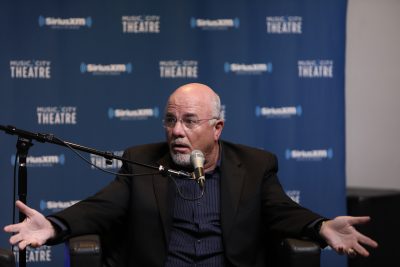
A caller to The Ramsey Show asked Dave Ramsey and George Kamel whether he should take out a home equity line of credit to wipe out a credit card balance and buy a replacement vehicle. Ramsey’s reaction was instant: “Wait, is this a prank call, dude? You said longtime listener and then you mentioned three things that we are vehemently against.” The caller’s exact request: “I am debating on getting a HELOC to pay for one, clear up some Amex debt that my wife and I have, two, buy a new vehicle.”
Trading an unsecured Amex balance for a HELOC means swapping a card company’s billing problem for a lien on your house. Miss the payments, and the lender forecloses. Ramsey’s closing analogy put it plainly: “I need to pay off the mafia, so I’ll go borrow from the cartel. I’d rather owe the cartel money than the mafia. You’re like, dude, this is a terrible life you’ve created for yourself.”
The verdict: Ramsey is right, and the math backs him
The caller’s own numbers make this an easy call. He and his wife earn $135,000 annually, including $30,000 in yearly distributions from an inherited IRA. The Amex balance is $14,000. He already has $15,000 in savings. The cash to clear the card is sitting in his account. Ramsey said the quiet part out loud: “Why don’t you use your savings and pay off the Amex today?”
A $14,000 balance at the Federal Reserve’s reported average credit card APR of roughly 22% for accounts carrying a balance generates more than $3,000 in interest every year it lingers. Americans collectively hold $1.28 trillion in credit card debt at rates like these, which is precisely why paying cash immediately stops the bleeding in a way that refinancing never can.
The HELOC alternative looks cheaper on the surface because the rate is lower. Current average HELOC rates sit around 7.23%, compared to more than 22% on credit card balances, but a lower rate is not a solution when the underlying problem is behavior. Kamel framed it cleanly: “You cannot use debt to solve for debt. You’re not paying it off. You’re simply moving it.” And once you move it, the debt is secured by the roof over the family’s head.
The savings excuse, dismantled
The caller’s hesitation was emotional rather than mathematical: “We then don’t have any savings. I don’t like taking money out of that IRA. I want to use those monthly stipends for as long as I possibly can.” Ramsey reframed it: “If you’re scared to part with the cash, you already did by going $15,000 into debt. Just, you did it without realizing it was someone else’s money that you got to pay back later. And later always comes, unfortunately.”
The $15,000 in savings paired with $14,000 in 22% debt leaves a real net position of roughly $1,000. Guarding the cash account while treating the card balance as someone else’s problem is pure accounting theater. The money is already gone; the only question is whether you pay the card company’s interest or keep it yourself.
The variable that decides whether this works
Behavior determines whether any debt payoff plan actually holds. Ramsey’s data point on this is blunt: “Personal finance is 80% behavior. It’s only 20% head knowledge. 88% of the time you take your debts and move them to a home equity loan, you don’t change your habits, and 9 out of 10 people run up more debt because they didn’t fix the habits that caused the debt.”
If the caller takes the HELOC and keeps the Amex active, the most likely outcome is two debts instead of one, with the home as collateral on the larger of the two. Pay cash, cut the card, and the cycle ends.
The car question and what to do next
The 2018 vehicle is failing but, by the caller’s own admission, could survive another year. That window is the savings runway. Ramsey’s prescription: “Use your cash savings to pay off the debt, cut up the freaking Amex, never use it again, never take out a HELOC, and then you save up for a car you can afford in cash. Make sure that car and everything, other cars, don’t add up to more than half your annual income. So for you guys, that’s $65K in cars.”
For any reader facing this same setup, the path forward breaks down into five concrete steps:
- Pay the card from savings today. Stop paying 22% interest on money you already have.
- Close or freeze the Amex. The card is the supply line. Cut it.
- Rebuild a $1,000 starter emergency fund, then a full three-to-six-month reserve. Fund it with the same dollars that used to service the card.
- Save monthly for the replacement car in cash. Keep total vehicle value under half of household income.
- Leave the home equity alone. A HELOC turns a billing dispute into a foreclosure risk.
You cannot borrow your way out of borrowing. Pay the Amex from the account that can cover it, and the problem is solved this afternoon.
Editor’s note: This article was updated to reflect current Federal Reserve data showing the average credit card APR on accounts carrying a balance reached 22.15% in Q2 2026, correcting a garbled rate range in the original. Current average HELOC rates of approximately 7.23% and the context of $1.28 trillion in total U.S. credit card debt were also added.
Contact [email protected] for any questions or corrections.














 Top Gaining Stocks
 Top Losing Stocks